Products & technical specifications
Products & Technical Specifications
The panel types, sizing and installation standards behind every quote we send out — so you know exactly what you're getting before work starts.
Panel & structure options
Five ways to build the line — pick the one that fits the garden.
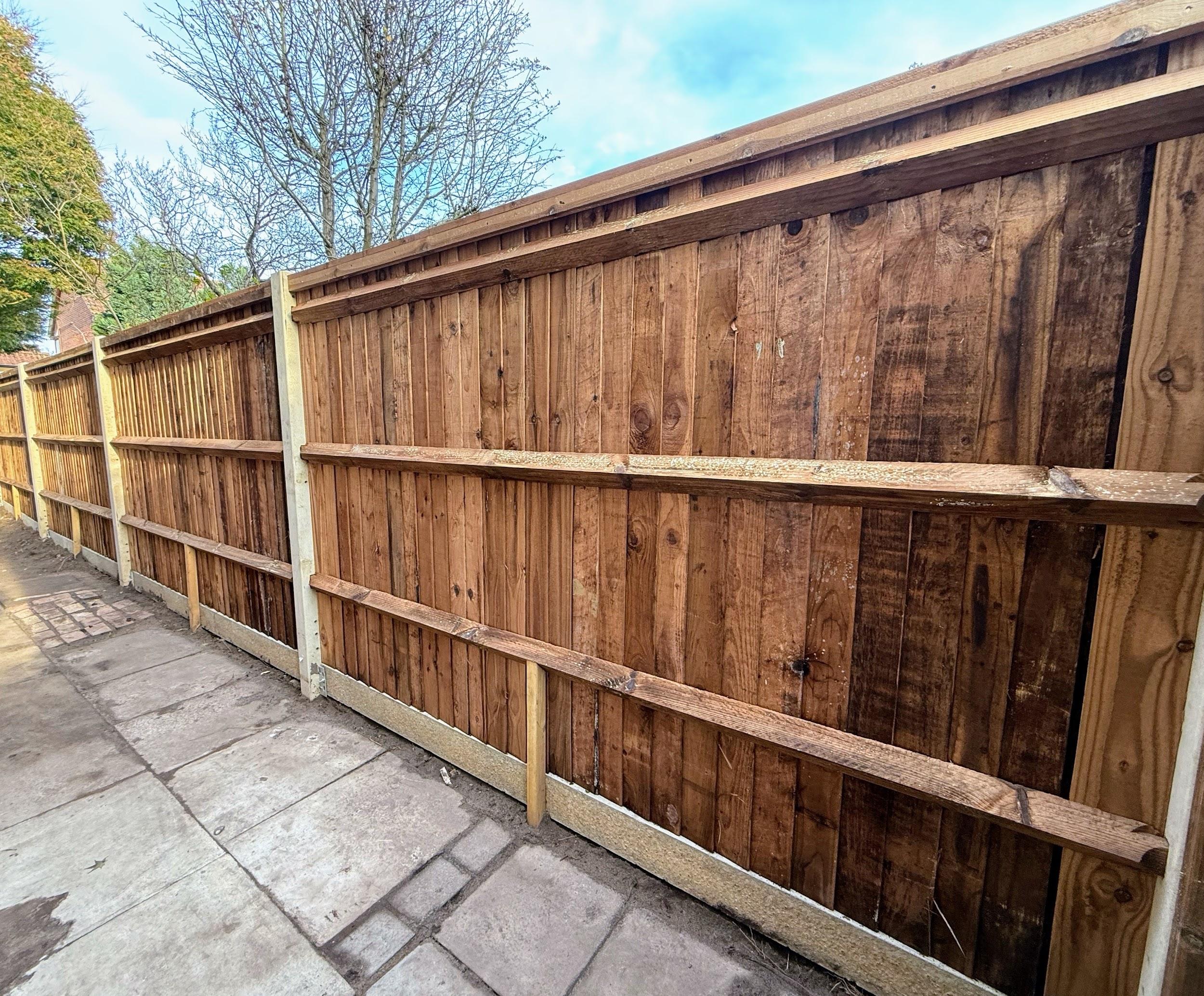
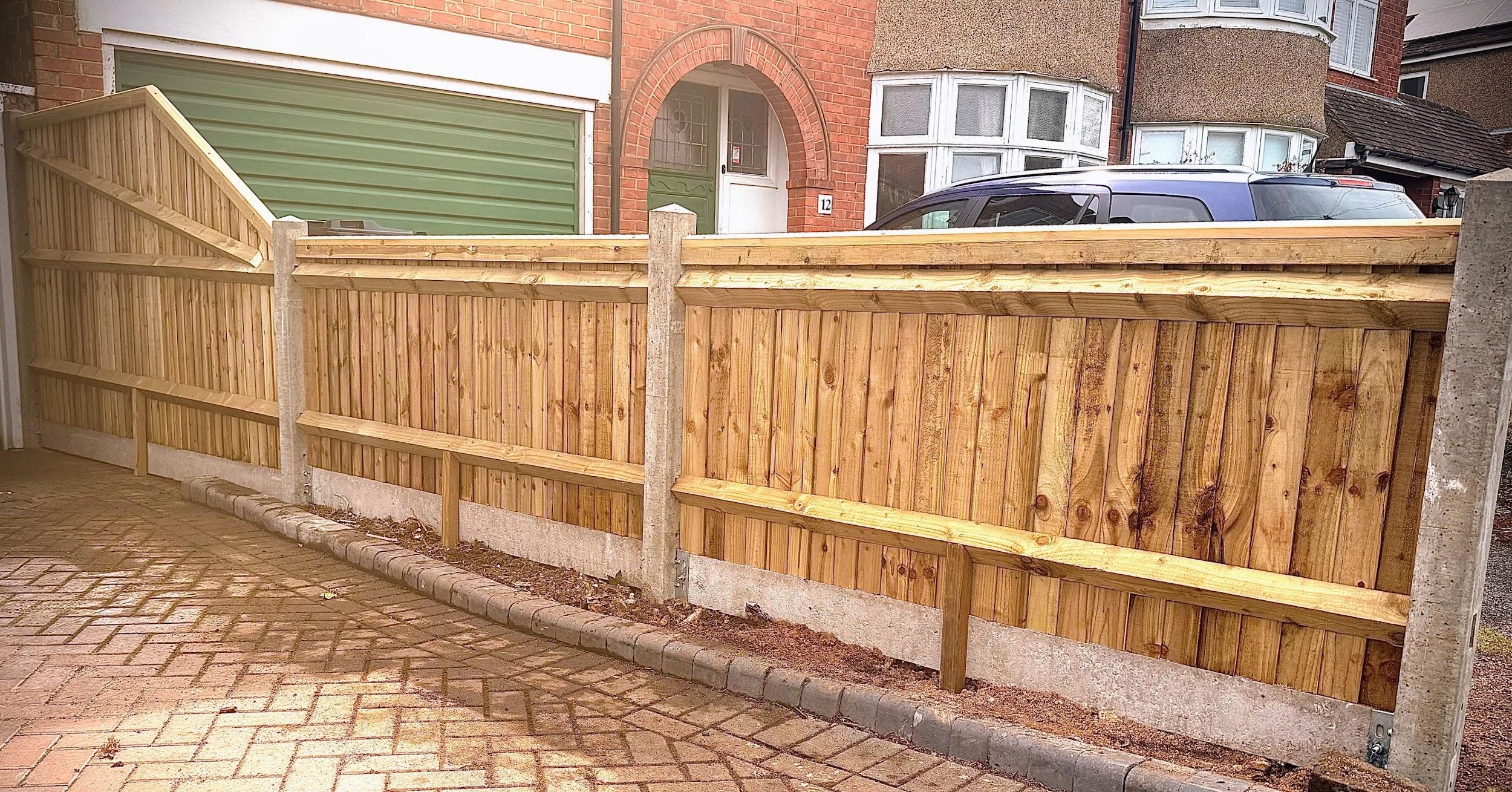
Close Board Panels
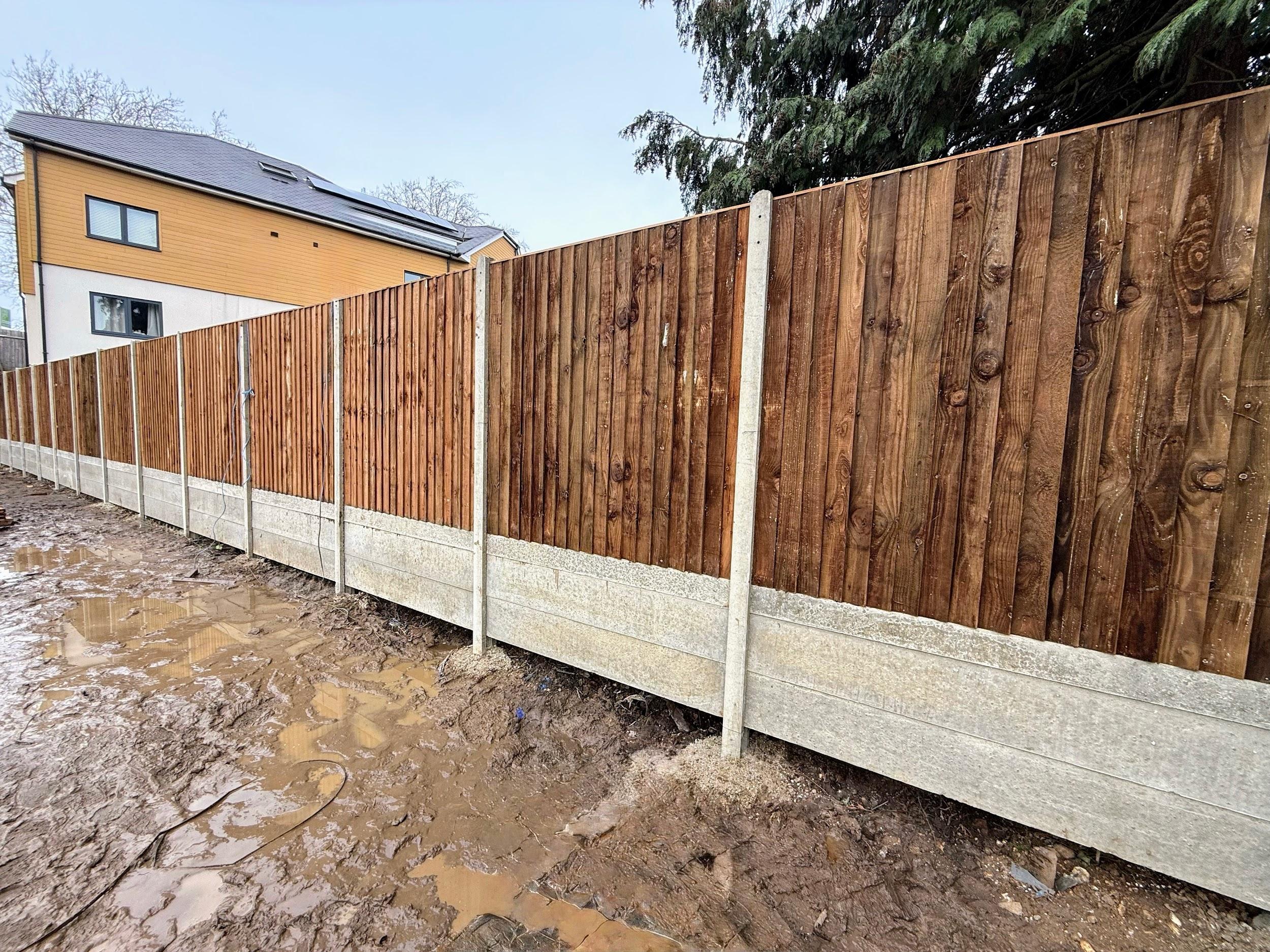
Robust vertical overlapping boards — maximum privacy and strength. Ideal for boundary fencing, and recommended with concrete slotted posts and concrete gravel boards.
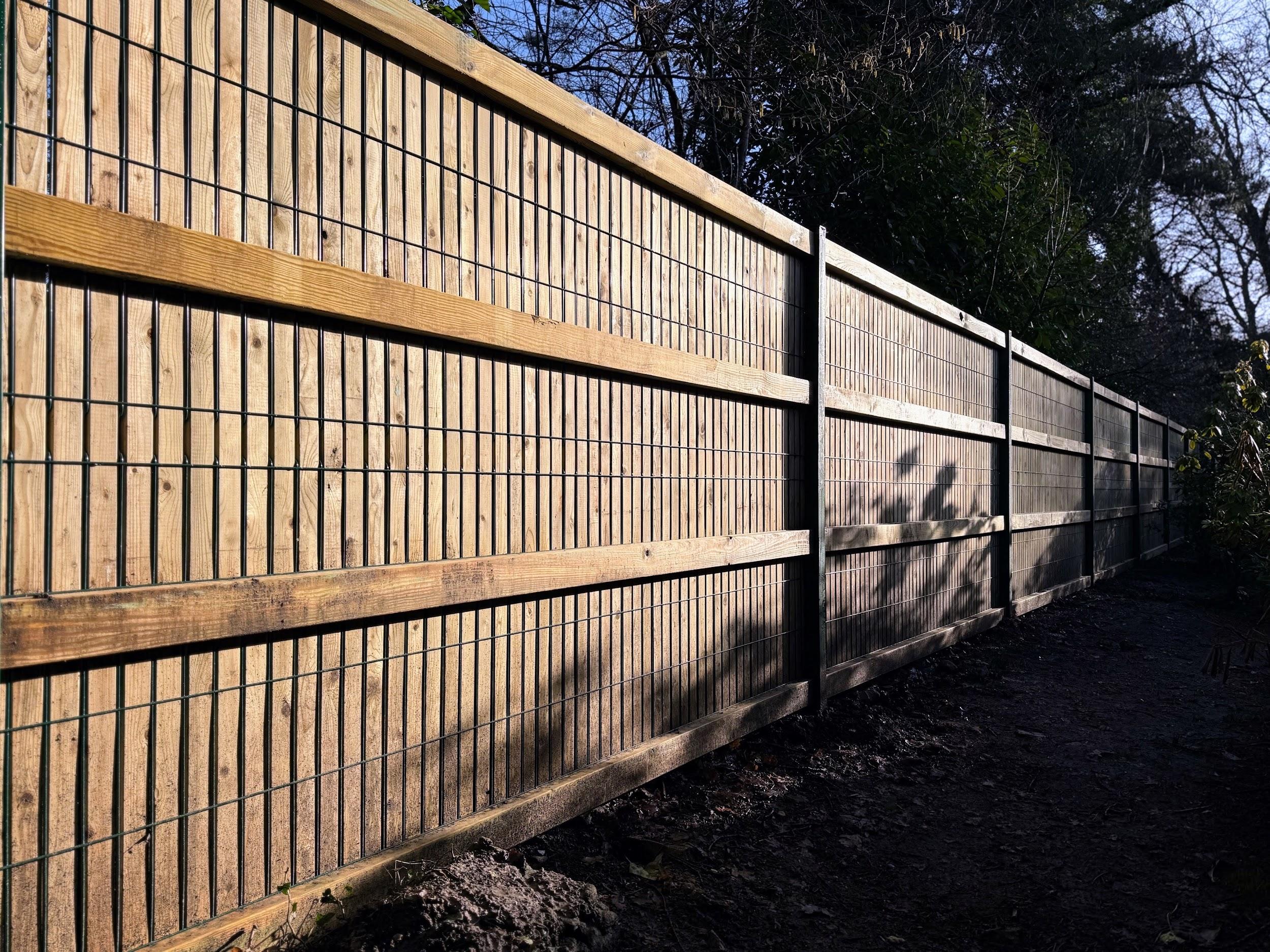
Close Board Fencing
Continuous heavy-duty solid boarding built on-site. Unparalleled strength and adapts to ground contours. Counter rail and capping available to protect the feather edge and improve the finish.
Waney Edge
Traditional overlapping horizontal boards. Cost-effective, with a classic rustic finish.
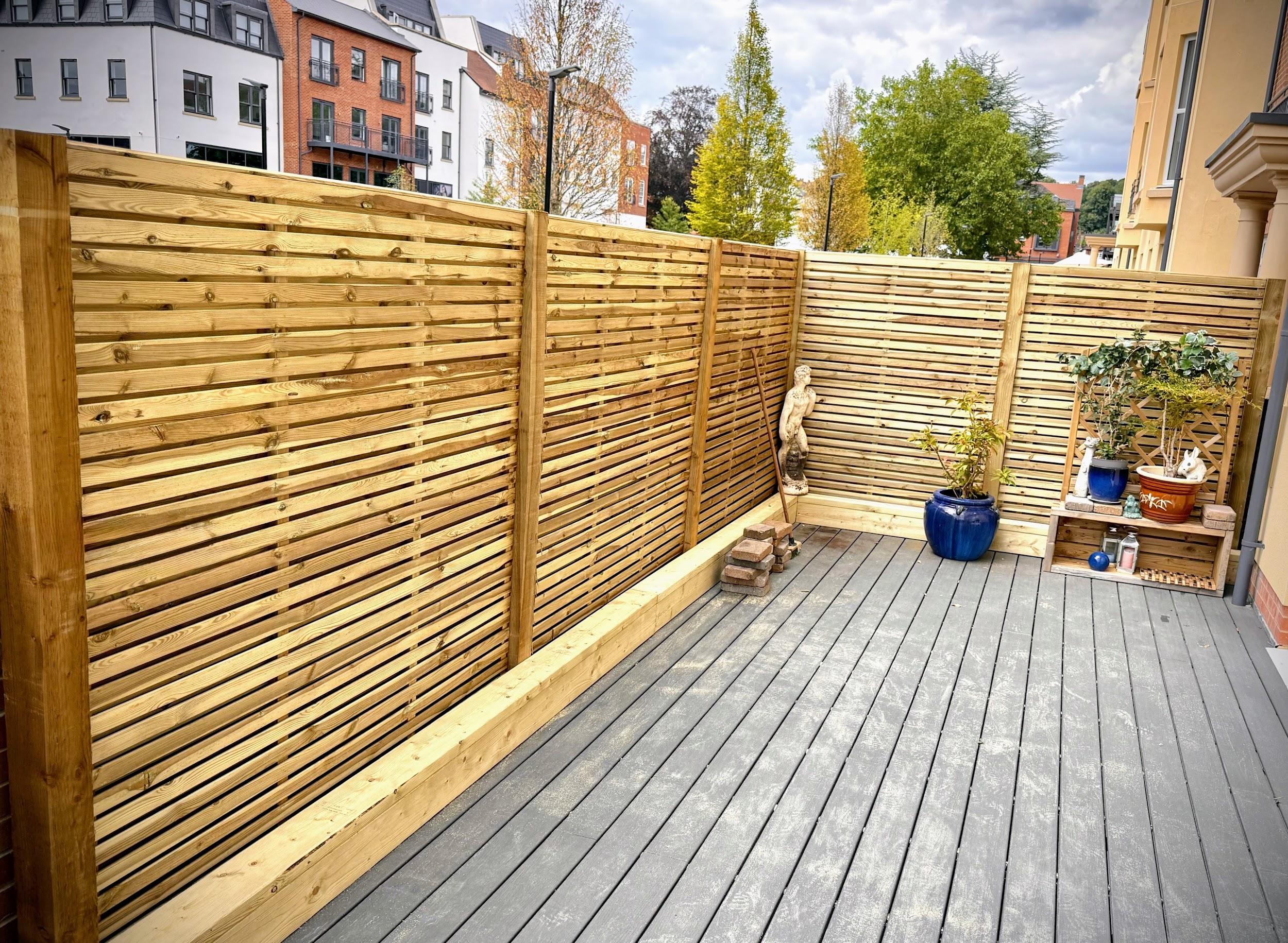
Double Slatted
Contemporary 'hit and miss' style — looks identical from both sides and lets wind pass through the panel.
Single Slatted
Modern horizontal design that lets light through — good for zoning a garden without closing it off.
At a glance
Privacy vs wind resistance.
| Panel / Structure Type | Best for privacy | Best for wind resistance |
|---|---|---|
| Close Board Panels | Excellent | Moderate |
| Close Board Fencing | Excellent | High |
| Waney Edge | Good | Moderate |
| Double Slatted | Moderate | Excellent |
| Single Slatted | Moderate | Excellent |
Wind resistance on slatted panels is excellent because the design lets air flow through the panel, reducing pressure on the posts.
Quick reference height chart
Panel + gravel board = finished height.
Posts & gravel boards
The structural options we stock.
Timber Posts
- •Square and rectangular timber posts in the sizes needed for panel, close board and slatted fencing.
Concrete Mortise & Slotted
- •Concrete mortise and slotted posts to match our timber range, including heavy-duty options for taller or exposed runs.
Concrete & Timber Gravel Boards
- •Timber and concrete gravel boards for panel and close board fencing, in the heights needed for each job.
Gravel boards can be stacked for level changes (e.g. a 400mm raised area = 300mm + 150mm board), but stacking isn't recommended for Close Board Fencing due to cracking risk over longer sections.
Installation rules of thumb
Standards we install to.
- 01Minimum post depth: 600mm below ground level.
- 02Fences over 1.8m: posts minimum 750mm below ground level.
- 03Timber or concrete posts work with all panel/fencing types and gravel boards — but timber posts with concrete gravel boards isn't recommended.
- 041.8m slatted panels can be custom cut to fit when a gravel board is used to reach 1.8m total height.
These are general guidance — actual post depth may need to go deeper depending on soil type and water retention on site.
In the field
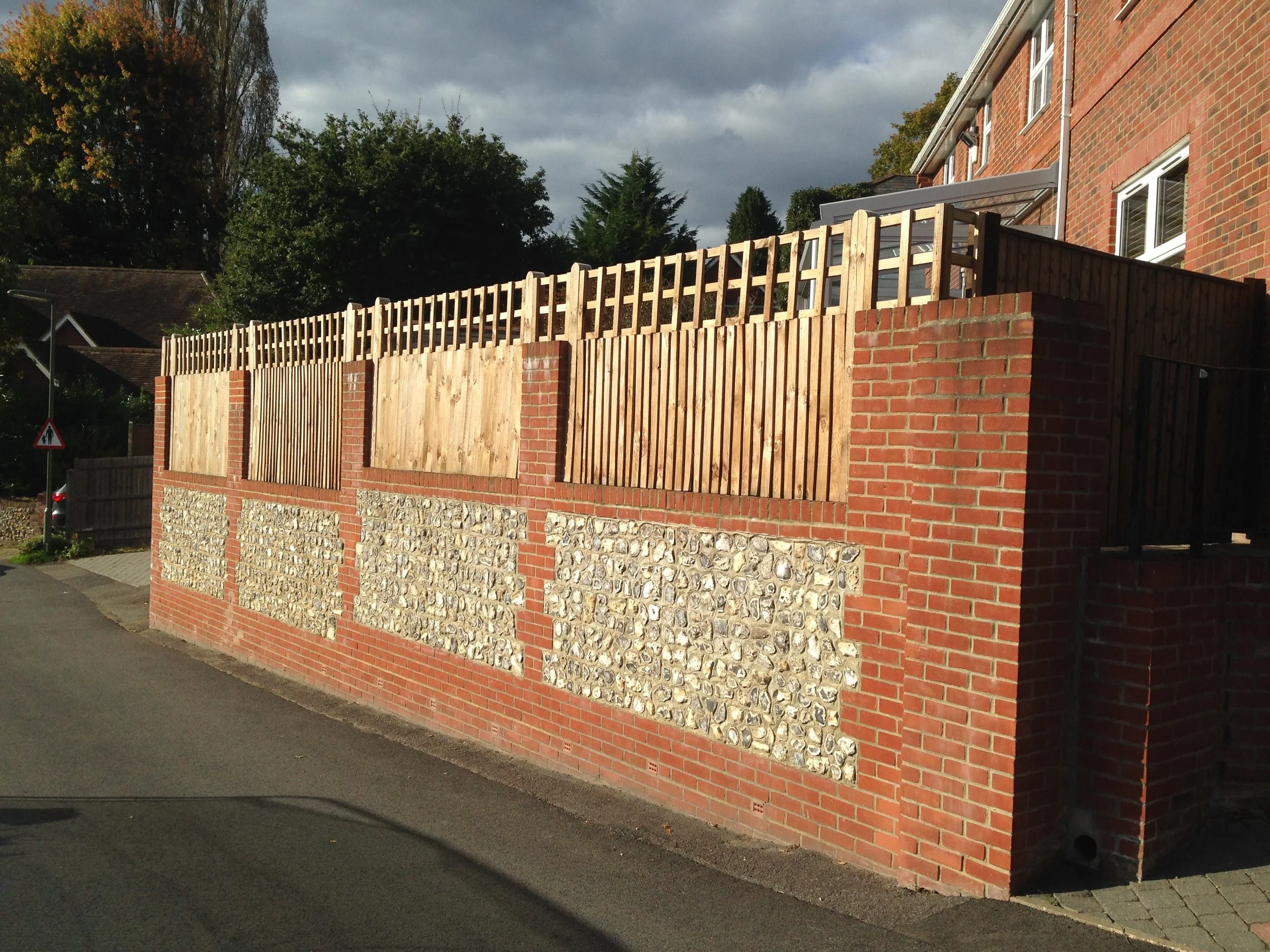
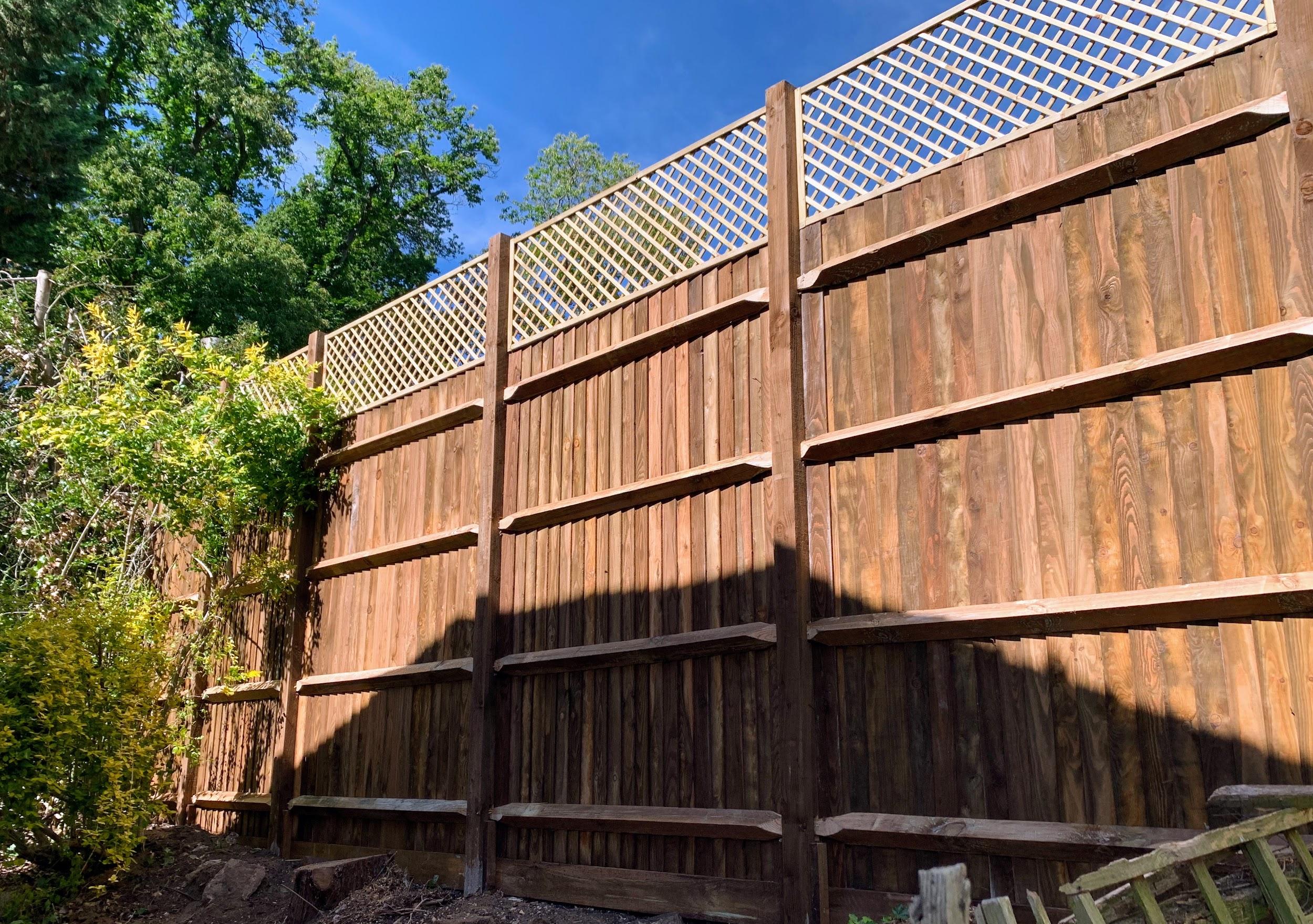
A few of our installations.
Ready to plan the job?
Let's price your fence.
Tell us the run length and site details — we'll turn this specification into a fixed quote.